
License, Permission, and Attribution Records
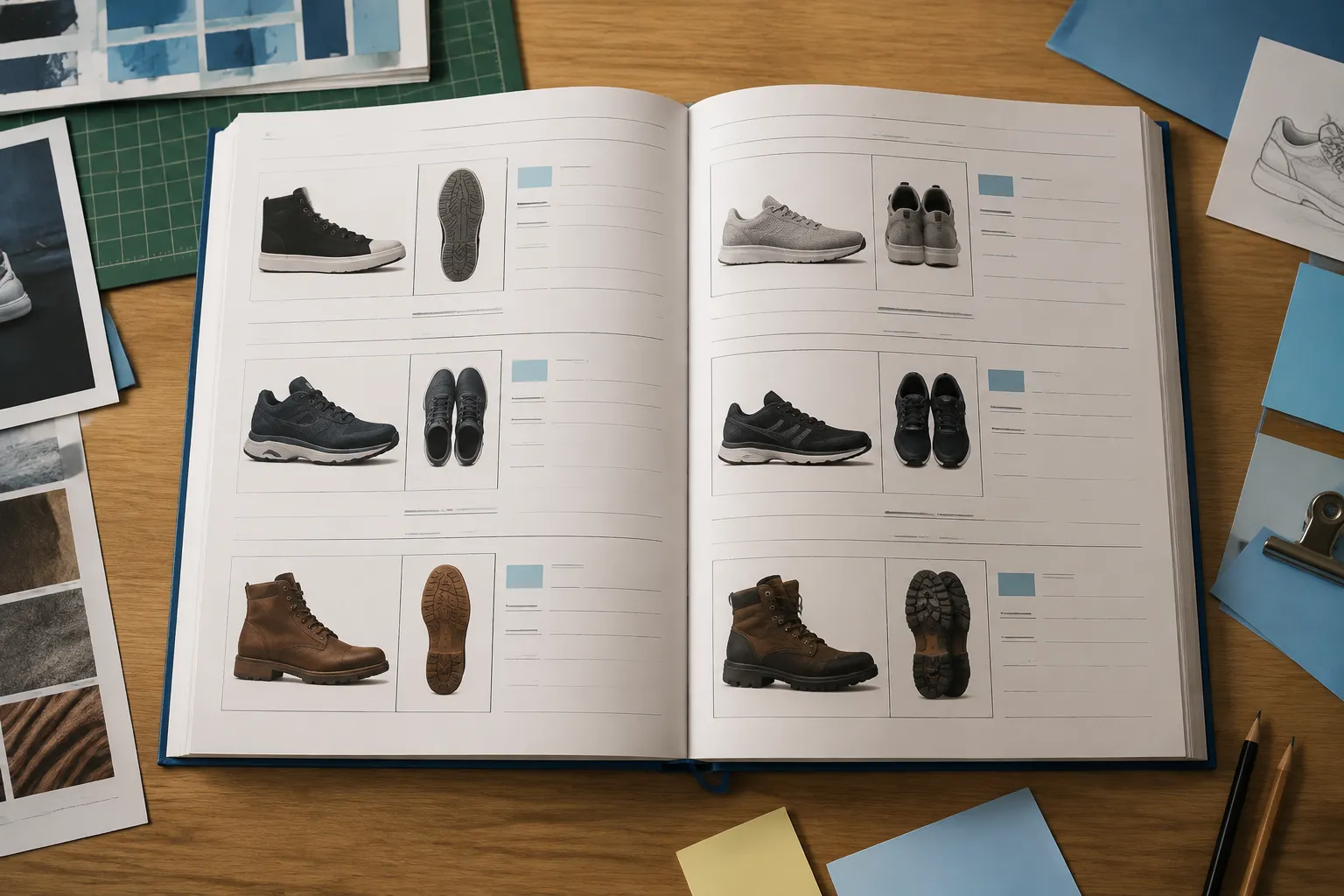
A footwear concept pitch may include a silhouette reference, upper detail, material cue, color direction, campaign mockup, or comparison view. Each image can help the team make a visual decision, but each also needs a traceable image usage rights record before the pitch moves into wider circulation.
The working question is more specific than “Can we credit this image?” Record the source, the documented use, the required attribution, and the questions that remain unresolved.
This separation keeps visual usefulness distinct from permission status. A reference may support a silhouette, material, or color direction while its rights position remains pending. That status belongs in the review record rather than behind a caption, platform label, or familiar source name.

Start With the Intended Pitch Use
The same image may need a different review when its audience, medium, or purpose changes. Record the intended use before interpreting the source:
- Internal moodboard or design review
- Client-facing PDF
- Concept comparison board
- Website or portfolio preview
- Packaging concept
- Campaign mockup
- Non-final turntable or presentation video
- Sales, launch, or other public-facing presentation
Add the audience, medium, territory, duration, project scope, and commercial context. These fields make the request specific enough to compare with a license or written permission.
An image suitable for internal discussion may not have terms that cover a public campaign mockup. A subscription or earlier project record may also be limited by medium, audience, territory, duration, or project. Account access does not settle every later use.
The visual question remains separate. A concept render may show a broad toe shape, layered upper zoning, a color relationship, or a material mood. It does not establish permission to reuse the reference, and it does not establish that the proposed footwear can be made, worn, or marketed as shown.
Build One Record Per Image
The internal record should carry more detail than the public credit line. Use one record for each image, even when several references came from the same board, collection, or platform.
A practical image source record includes:
- Internal asset ID
- Reference type: silhouette, upper, material, color, campaign, comparison, or turntable
- Source URL
- Creator, photographer, illustrator, or rights holder when known
- Title or concise description
- Date collected
- Exact license or permission basis
- Specific license identifier
- License link when available
- Permitted media
- Territory and duration
- Project scope and intended audience
- Commercial context
- Modification status
- Required credit wording
- Permission correspondence or contract reference
- Unresolved ownership, likeness, or license questions
- Reviewer and review date
- Current status
The source URL helps locate the item. It does not, by itself, show that the uploader owned the image or could grant reuse. Preserve the evidence behind the decision, including the exact license wording, permission message, contract reference, or source statement.
A shorter public attribution line may identify the creator, title or description, source, and license. Generate it from the internal record rather than treating it as a substitute for that record.
Four Working Statuses
A small status system keeps the review conversation attached to the state of the record. These labels describe documentation, not visual quality.
Permission or License Documented
Use this status when the record contains written permission, a contract, or an identifiable license basis that addresses the intended use.
Keep the limits visible. Note whether the terms cover internal review, client presentation, public display, campaign mockups, editing, territory, duration, and commercial context. A documented basis for one use does not automatically cover a later website case study or campaign asset.
Open-License Terms Verified
Use this status only after identifying the specific open license and checking its conditions against the proposed use.
For Creative Commons material, record the exact license identifier and license link rather than writing only “Creative Commons.” Check the relevant conditions:
- Attribution
- Commercial or noncommercial use
- Adaptation
- No-derivatives terms
- Share-alike requirements
- Additional notice or credit requirements
Record whether the image was cropped, annotated, composited, recolored, or otherwise adapted. Placing an image into a concept board does not remove the need to inspect the applicable terms.
The license label is only one part of the record. Connect the source to a named creator or documented rights basis, and record any remaining uncertainty about the source itself.
Public-Domain Basis Documented
Use this status when the record explains why the particular image or work is being treated as public domain under the relevant framework.
Do not rely on a general “public domain” label. Record the source statement, relevant jurisdiction or framework, and any conditions attached to the digital item. The treatment of an underlying work may differ from the treatment of a supplied scan, photograph, or collection item.
The available material is primarily United States-oriented. Cross-border use may require a separate review rather than an assumption that the same basis applies everywhere.
Rights Status Unresolved
Use this status when authorship, permission, license scope, ownership, or applicable conditions cannot be verified.
An unresolved label is a useful workflow result. It allows the team to discuss the image as a visual reference while preventing it from quietly entering a public-facing deliverable as though its use had been documented.
If the image carries the central visual decision, look for a replacement with a clearer source record. If it only supports a broad material or color direction, replace it or recreate that direction through an internally produced concept study.
Credit Is Not Permission
Attribution identifies a creator or source according to the applicable requirements. Permission or a license addresses whether the proposed use is covered by defined terms. A credit may satisfy an attribution condition, but it does not create permission where no applicable basis has been documented.
Common shortcuts leave the record incomplete:
- Adding the creator’s name without identifying a license or permission basis
- Copying a platform caption into a pitch deck
- Describing an image as Creative Commons without naming the license
- Assuming search visibility means reuse is permitted
- Treating a creator profile as proof of ownership
- Reusing an image because it appeared in an earlier project
- Treating a subscription as covering every medium and client
- Assuming a watermark is the only relevant restriction
The public credit line should be accurate and useful. It should not be presented as evidence that the underlying permission question has been answered.
Compare Source Paths by Their Record Needs
Different source paths create different documentation tasks. The review should compare the evidence available for the proposed use, not rank one source category as universally preferable.
Platform or Search Result
A search result can help locate a silhouette, upper, or material reference. It is a discovery step, not a rights determination.
Open the source item and preserve the creator, title or description, license statement, and relevant terms. If the original source cannot be found, record the search path and mark the result unresolved rather than treating the search page as the source.
Creative Commons Image
The exact license matters. Record the creator, work title or description, source, specific license, license link, and modification status.
Compare the intended pitch use with the license conditions. A noncommercial condition, no-derivatives condition, or share-alike requirement may affect how the image appears in a commercial concept workflow. State which condition was checked and which question remains open.
Stock or Subscription Image
Record the provider, account or license reference, asset identifier, permitted use, medium, audience, territory, duration, and project scope.
Do not rely on a general subscription statement or earlier permission record. The asset terms and the proposed use control the review. Platform phrases such as “unlimited use” or “rights managed” are prompts to inspect the agreement, not universal interpretations.
Commissioned or Contractor-Created Image
Keep the written ownership or assignment terms with the image record. Note who created the image, who commissioned it, which rights were transferred or licensed, and which uses are covered.
Payment alone should not be treated as proof that ownership transferred. The applicable contract and jurisdiction determine what the arrangement establishes.
Reference Showing Identifiable People
Add a separate likeness and publicity-rights check when people are identifiable.
A photograph license may not resolve every right connected with the person shown. Record whether identifiable people appear, whether release or permission information is available, and whether the question has been escalated for applicable review.
Keep this check beside the image record rather than folding it into a general statement that the photograph is licensed.

Review Provenance Without Overstating the Search
Provenance is the chain connecting an image to its source, creator, license, and use history. That chain can remain incomplete even when the image is easy to find.
A useful provenance review records:
- Where the image was first found
- Whether the original source was located
- Which creator or rights holder is named
- Which license or permission statement is available
- Whether the statement applies to the specific image
- Whether the intended pitch use is covered
- Which questions remain unresolved
- Who reviewed the record and when
Reverse-image searching may help trace an earlier version or locate a source page. It does not automatically establish authorship or permission. Preserve the steps taken and the reason the result remains unresolved when the search does not produce a reliable source.
A low-confidence source does not become stronger because several websites repeat the same image. Repetition can show circulation, not ownership.
Keep the Internal Record Separate From the Credit Line
The internal record supports review and handoff. The public attribution line supports visible acknowledgment where required.
For a concept pitch, the internal record may state:
- Silhouette reference for side-profile proportion
- Creator identified; exact license checked
- Cropped for comparison board
- Client-facing PDF covered; website use not checked
- Credit wording taken from the applicable license guidance
- Likeness question not applicable
- Campaign use remains unresolved
The public line may be much shorter. It should preserve the required creator, title or description, source, and license information without implying broader rights than the record supports.
Do not turn unresolved internal questions into settled statements in the pitch. If the image is still needed for discussion, label its use and status internally, then resolve or replace it before wider circulation.
Match the Review to the Visual Deliverable
Rights review works best when it follows the visual decision already being made.
For a silhouette board, confirm that each image is being used to discuss form, proportion, or construction intent. Then inspect source and permission status as a separate track.
For a material study, record whether the image supports surface response, texture, finish, or color mood. The reference may suggest a direction without establishing that the proposed material exists, performs as intended, or can be produced.
For a campaign mockup, expand the fields. Audience, public medium, commercial context, territory, duration, visible people, logos, and modification status carry greater review weight.
For a comparison view or non-final turntable, inspect every source contributing to the sequence. One unresolved image can remain hidden when several references are combined into a single presentation.
A concise review sequence is:
- Identify the visible decision the image supports.
- Confirm the exact source and named creator.
- Inspect the permission or license basis.
- Compare the terms with the intended pitch use.
- Record attribution and modification requirements.
- Check people, logos, and separate rights prompts.
- Assign one of the four statuses.
- Decide whether the image can stay, needs escalation, or should be replaced.
- Record the handoff to design, engineering, sampling, or later review.
This sequence keeps visual approval, rights review, and footwear approval in separate lanes.
Common Misreadings in Image Usage Rights Review
“We credited the photographer, so the image is usable.”
Credit may address attribution. It does not, by itself, document permission.
“The page says Creative Commons.”
Identify the exact license and its conditions. The uploader’s authority to offer the work is a separate source question.
“It was already used in an earlier pitch.”
The earlier record may cover a different project, audience, medium, territory, duration, or commercial context.
“The image is only a reference.”
Reference use explains the design purpose, but it does not automatically answer the source-rights question.
“The image came from a paid account.”
Record the applicable asset terms and intended use. Account access does not settle every new medium or project.
“The source is public domain.”
Document the basis for that status and check whether the particular digital item has additional restrictions or different treatment across jurisdictions.
“The contractor was paid for the visuals.”
Retain the written ownership or assignment terms. Payment is not a substitute for those terms.
Questions to Resolve Before Wider Presentation
What is the difference between a license and permission?
A license expresses permission through defined terms. Separate permission may be written for a particular person, project, medium, duration, or use. The record should identify which basis applies and what it covers.
What should an image attribution record include?
Record the creator, work title or description, source, specific license or permission basis, license link when available, required credit wording, and modification status. Keep broader source and rights information in the internal record.
Can an unresolved image remain in an internal concept review?
It may remain identified as unresolved when the team needs it to discuss a silhouette, material, or color direction. Before public presentation or broader circulation, resolve the status or consider a replacement.
Does fair use answer the question for a concept pitch?
Fair-use analysis is fact-specific. General United States guidance does not provide a universal answer for footwear references or clear any particular image. Record the intended use and seek applicable jurisdiction-specific review for the question at hand.
Does a photograph license cover an identifiable person?
Not necessarily. Keep a separate likeness or publicity-rights check when people are identifiable, because the photograph’s license may not resolve those issues.
What should happen when the original creator cannot be verified?
Mark the rights status unresolved, preserve the provenance-search steps, and consider replacing the reference before the pitch becomes public-facing.
The Handoff Decision
A complete image usage rights review does not force every reference into a simple yes-or-no label. It makes the current state visible enough for the next decision.
A reference may move forward for the stated pitch use when the record documents a permission or license basis that matches that use. An open-license or public-domain reference may also move forward when its exact terms, basis, and remaining conditions have been checked.
An unresolved reference needs a named owner and next action. That action may be a source check, permission request, contract review, separate likeness-rights question, or replacement with an internally created concept visual.
The visual decision and product decision still belong to different stages. A reference can carry a strong silhouette, material, or color direction while its source record needs work. A concept render can support design review without establishing fit, comfort, durability, safety, manufacturability, endorsement, or product performance.
Close the record with three visible answers: what the image contributes, what use is documented, and what must happen before the asset reaches the next audience.

Sources
- Copyright, Attribution, and Fair Use - Illinois Extension
- Copyright & Permissions - Images, Videos, and Procedures - Library Guides at Florida State University Maguire Medical Library
- Recommended practices for attribution
- 3.3 License Types - Creative Commons
- Fair Use (FAQ) | U.S. Copyright Office
- What is Copyright? | U.S. Copyright Office
- Circular 1 Copyright Basics
- Berkeley-Digital-Library-Copyright-Project.pdf