
Footwear Visual References and Source Records
A footwear reference becomes useful when a team can explain what it is being used to decide.
A side view may support a silhouette discussion. A close material image may help compare surface response. A colorway may suggest a relationship between the upper, sole, logo, and lining. A campaign image may show a presentation direction. None of these uses is self-explanatory. Without a stated purpose, the same image can lead reviewers toward different interpretations.
The practical task is to turn a loose collection of footwear design references into a reviewable concept-stage set. Each reference should identify a visible decision, support a relevant comparison, carry a source record, and state what remains unresolved for design development, engineering, sampling, testing, or rights review.
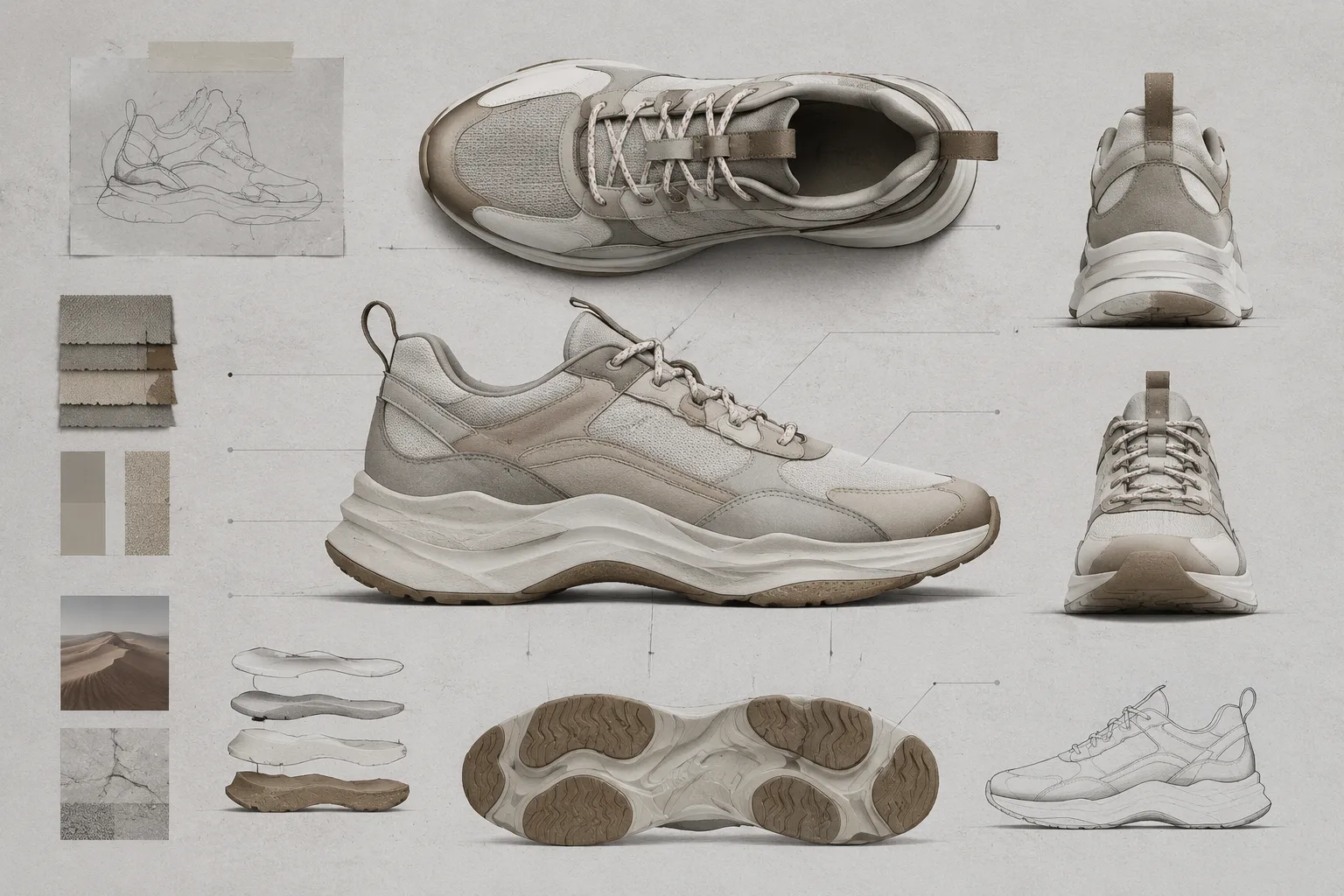
What Footwear Design References Are For
A visual reference is an interpretive input. It can show or suggest:
- silhouette and overall proportion
- upper zoning and direction lines
- color relationships and contrast
- material appearance and surface response
- finish, gloss, texture, or softness cues
- camera angle and view coverage
- lighting and background treatment
- presentation direction for a concept render or campaign mockup
- relationships between variants in a collection
The image does not automatically carry the meaning assigned to it. A pale upper may be read as visually light, a dark outsole as visually substantial, or a reflective surface as technical. These are interpretations of appearance, not findings about physical behavior.
Write the intended reading beside the image: “Use this reference for layered upper zoning,” or “Use this reference for the contrast between the upper and midsole.” Then state what is outside the decision: “Do not use this image to infer material composition, fit, durability, or production method.”
That small record changes the review from “Do we like this?” to “Does this show the direction we need to compare?”
A Shared Review Model
A useful reference set answers six questions:
- What decision is under review?
- Which visible feature carries that decision?
- What alternatives are being compared?
- Where did each reference come from?
- What is known about its intended use?
- What must wait for another stage?
The first question controls the others. A silhouette review needs views that make geometry easy to inspect. A material review needs enough surface detail and consistent conditions for appearance to be compared. A presentation review needs attention on camera, lighting, background, crop, and sequence rather than construction detail.
A set can contain strong images and still be weak evidence for a meeting. Side views, angled views, product pages, editorial images, and cropped material details may be mixed without explaining how they should be compared. Different perspective treatments, lighting conditions, and image scales can also distort judgments about proportion or color.
| Review layer | Question |
|---|---|
| Observable cue | What can the image visibly show? |
| Intended interpretation | What should the team take from it? |
| Comparison use | Which alternative does it help distinguish? |
| Unresolved dependency | What requires design development, a physical sample, or testing? |
| Record status | What is known about the origin and intended use? |
This model supports selecting, interpreting, documenting, and reviewing footwear visual references without turning a mood board into a collection of unsupported conclusions.
Group References by the Decision
Start with the decision and collect images that isolate it. A reference can serve more than one purpose, but its primary role should be clear.
| Decision | Look for | Keep unresolved |
|---|---|---|
| Silhouette | Toe shape, heel volume, collar height, sole profile, and overall proportion in comparable views. | Fit, comfort, support, stability, durability, manufacturability, and performance. |
| Upper intent | Panel boundaries, overlays, openings, straps, lace zones, seams, and relationships between upper sections. | Pattern viability, assembly sequence, material behavior, and construction feasibility. |
| Color relationship | Base, secondary, and accent colors; contrast between neighboring zones; continuity across variants. | Final color specification or reliable appearance across materials, lighting, and display conditions. |
| Material appearance | Grain, texture, diffuse response, highlight behavior, translucency, roughness, or reflectivity as visible cues. | Material identity, composition, physical performance, and production behavior. |
| Presentation direction | Camera angle, crop, lighting, background, shadow, surface separation, and image sequence. | Any conclusion about the underlying product that the presentation treatment may conceal. |
| Variant logic | What remains consistent across the collection and which visual variable changes between versions. | Whether the final products will share physical, commercial, or performance characteristics. |
For a silhouette review, avoid a dramatic perspective treatment when it changes the apparent shape unless perspective is itself part of the presentation discussion. For a color review, describe the relationship rather than relying on a color name. For a material review, describe the visible cue without converting it into an unverified material identity.
“Matte surface appearance,” “fine woven texture cue,” and “high-contrast upper-to-sole relationship” preserve useful uncertainty. They are more defensible than naming a material or finish that the image does not document.
Compare Like With Like
Comparison becomes less useful when too many variables change at once. Keep the primary view, scale, crop, lighting treatment, and background as consistent as the decision allows. Change one meaningful variable where possible, then record what changed.
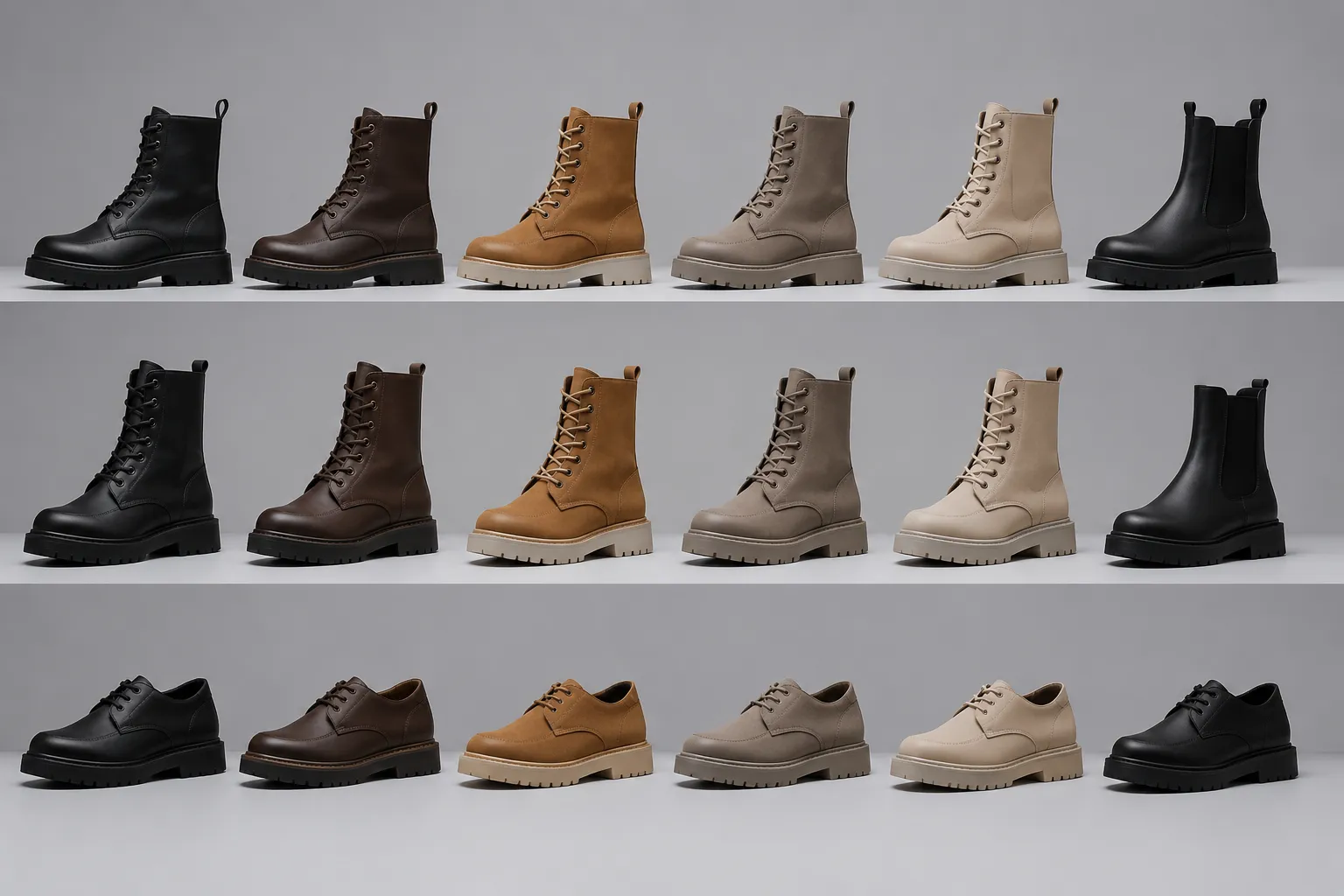
For silhouette reference sets, a consistent lateral view can make toe length, heel volume, collar proportions, midsole profile, outsole profile, and upper-to-sole balance easier to inspect. Add a three-quarter or secondary view only when it answers a separate question. It can reveal volume that a side view hides, but it also introduces perspective and may alter the apparent balance.
Upper zoning references benefit from visible annotations. Mark where a panel begins and ends, where an overlay changes direction, or where a material boundary creates emphasis. If the reference supports a line, volume, or layering decision, say so directly.
Controlled footwear-image studies provide bounded examples of why view coverage and region selection deserve attention. An eye-tracking study of sneakers examined how viewers attended to selected regions under controlled image conditions, including lace and vamp areas. Its findings do not define a universal rule for every shoe or review room. The practical lesson is narrower: if a detail matters, show it clearly and compare it deliberately.
A concept image can support appearance and direction. It cannot, by itself, establish fit, comfort, durability, safety, manufacturability, production readiness, or physical performance. Those questions belong to later design, engineering, sampling, and testing work.
Record Color, Material, and Finish Cues
A color-material-finish set should show relationships, not only isolated swatches. Record the intended role of each treatment:
- base color, secondary color, and accent
- logo, branding, lining, collar, midsole, or outsole zone
- upper treatment and finish contrast
- surface texture, gloss, roughness, or highlight behavior
- continuity or variation across a collection

A reference may show that a light panel contrasts with a darker neighboring area, that a repeated block structure connects several variants, or that a gloss difference separates adjacent zones. These are useful visual decisions.
The same image may create misleading impressions. A bright highlight can make a surface appear more reflective than it is. A shadow can deepen a color. Compression can remove texture. A dark background can change the apparent brightness of the shoe. Note the viewing condition when it affects the comparison.
Research on controlled footwear images and structured color variation can help illustrate the value of isolating variables. It should not be turned into a universal rule about preference or design success. In a concept review, the stronger practice is to keep the comparison stable and state which visual variable is being examined.
Final material, color standard, finish, and construction remain unresolved until the appropriate design and physical development work exists.
Separate Product Views From Presentation Views
Product references and presentation references answer different questions.
Product views help the team inspect silhouette, upper zoning, color placement, and surface relationships. Presentation references define how a concept should be seen: lateral, top, front, rear, or three-quarter view; camera height; crop; negative space; background tone; shadow density; highlight control; detail framing; and still or turntable sequence.
A camera reference can make a shoe appear more elongated or compact. Lighting can emphasize a ridge, flatten a tonal difference, or hide a transition. A background can increase or reduce contrast. These effects belong to the presentation decision.
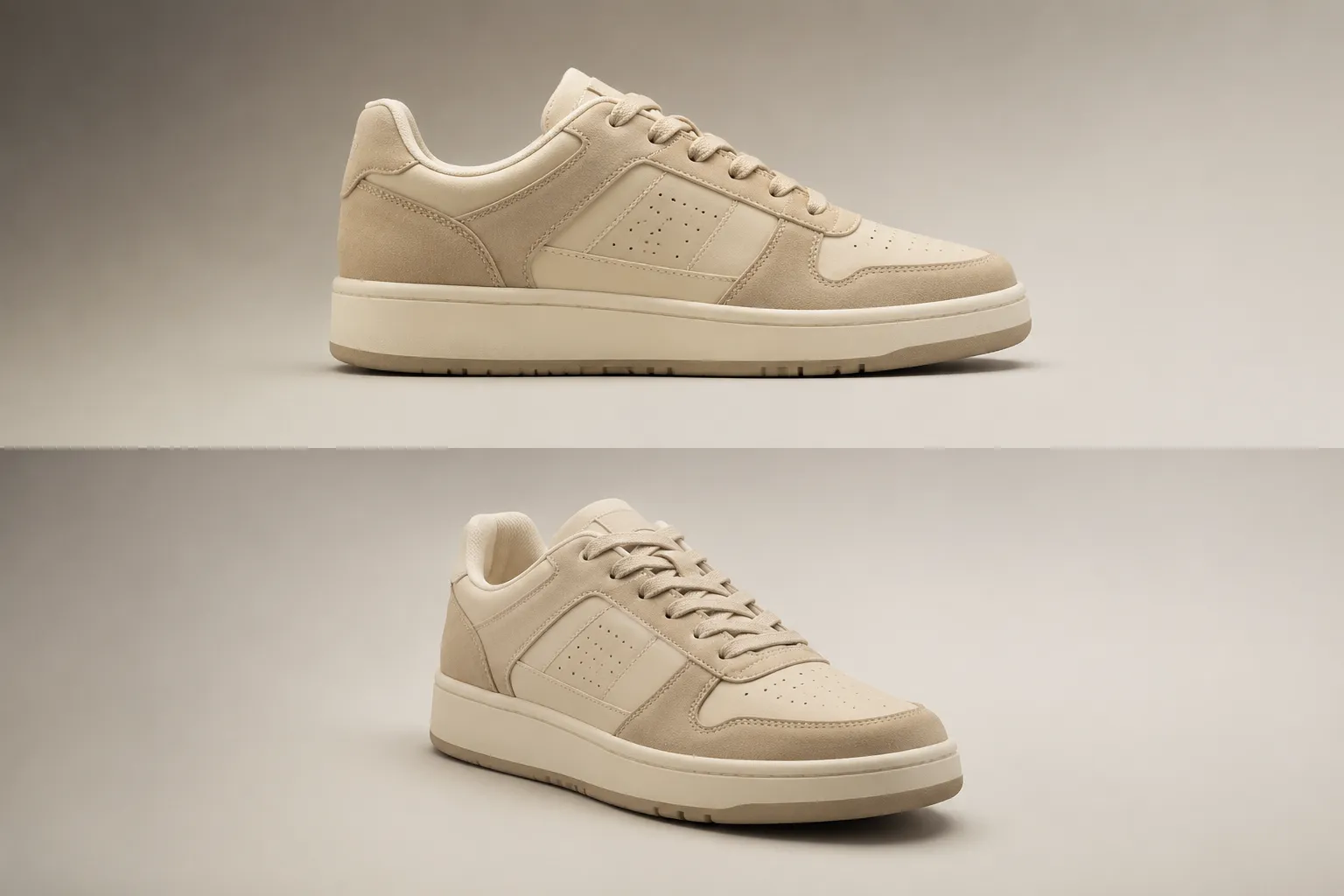
Keep a dramatic campaign image separate from silhouette evidence when its main value is atmosphere or framing. A clean product-style view may reveal proportions while saying little about campaign mood. In the brief, specify the purpose in one line: “Compare upper zoning under a neutral three-quarter view,” or “Evaluate whether the variants read as one visual family in a shared layout.”
Build a Source Record With Each Reference
A source provenance log makes a reference traceable. It records what the team knows; it does not automatically establish that an image may be reused in every context.
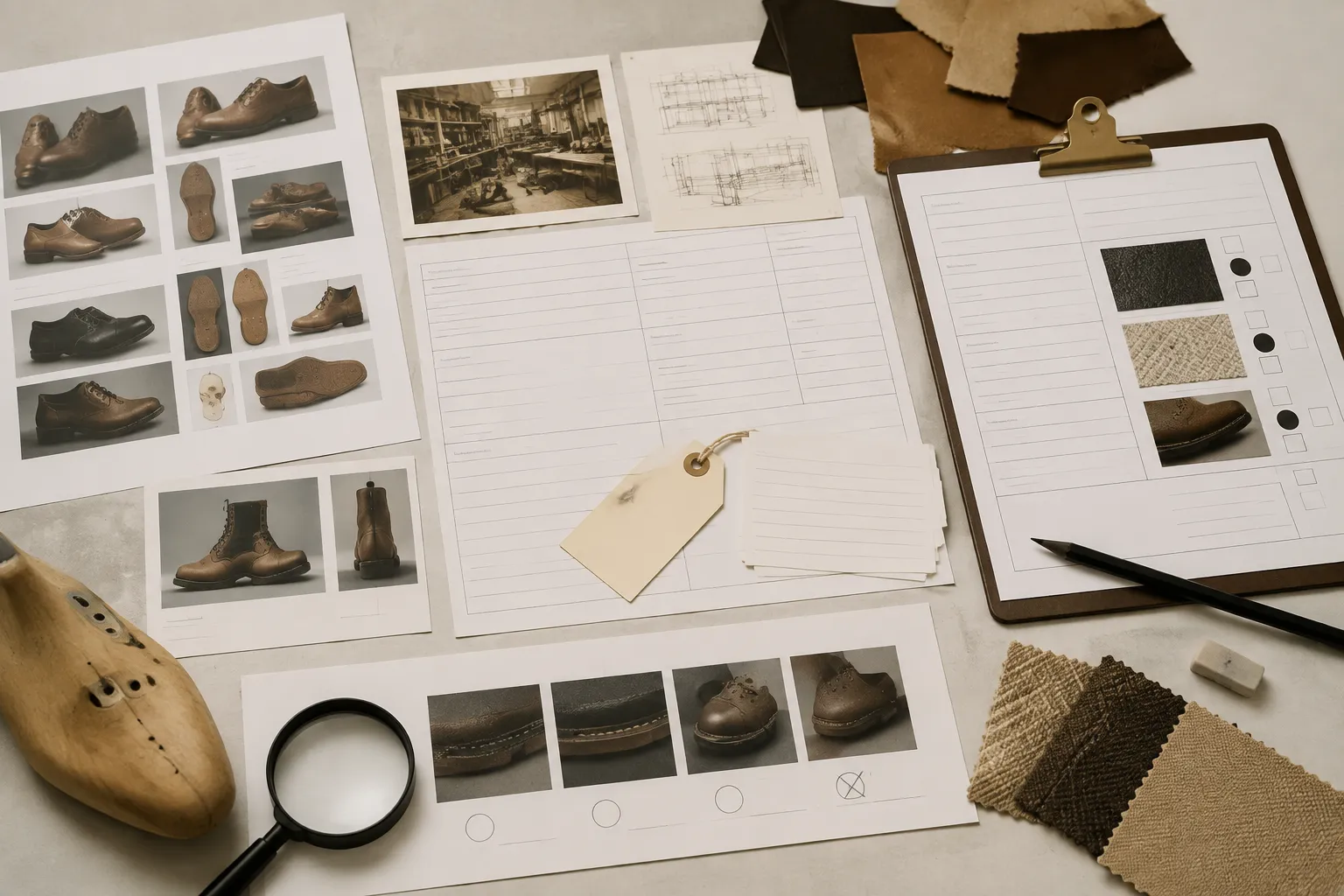
| Field | What to record |
|---|---|
| Reference ID | A stable internal label. |
| Origin | Known page, archive, contributor, supplied file, or unresolved source. |
| Capture date | When the team obtained or recorded the reference. |
| Original context | Product view, campaign image, material study, sketch, or another context. |
| Intended use | Internal discussion, brief, client review, published work, or unresolved. |
| Visual decision | Silhouette, upper zoning, color, material appearance, camera, or presentation. |
| Interpretation note | What the team is meant to notice and compare. |
| Record status | Known, documented, restricted, unclear, or pending review. |
| Transformations | Crop, color adjustment, annotation, background removal, or other change. |
| Owner and review date | Who maintains the record and when it should be checked again. |
Keep the original source context separate from the edited working copy. Later reviewers should be able to distinguish the source image from an internal crop, markup, or adjusted presentation.
Keep Rights Status Explicit
Source and rights questions belong in the reference workflow, but they should be described precisely. “Source identified” is different from “use permitted.” “Attribution information recorded” is different from “permission documented.” “Internal reference under review” is different from permission to place an image in a public brief, campaign, article, or portfolio.
For each image, record who supplied it or where it was found, what permission or license information is available, whether the intended use is internal or public, whether attribution instructions are known, whether edits or crops are permitted under the recorded terms, and which questions remain unanswered.
When a reference will leave the internal review process, route the unresolved question to the responsible reviewer and retain the relevant documentation. A source log is a record of status, not a substitute for topic-appropriate permission or rights review.
An attractive image should not become a master reference with no traceable context. If its origin or intended use is unclear, label that uncertainty in the set and keep it distinct from references with documented records.
Audit the Set Before Handoff
A reference library changes as the project moves forward. Review it before a major meeting, after a direction change, and before external distribution.
| Audit | Check | Correction |
|---|---|---|
| Relevance | Does every image support a current visual decision? | Remove references that no longer serve the brief. |
| Consistency | Are views, crops, scales, and presentation conditions understandable? | Standardize the comparison or explain the deliberate difference. |
| Interpretation | Does each image state what it shows and what the team should infer? | Add a short decision note or move the image to an inspiration-only group. |
| Record status | Can the team trace origin, intended use, transformations, and open questions? | Separate documented references from unclear or pending records. |
An audit should also expose overreach. If a concept render is being used to support a claim about fit, comfort, durability, safety, construction, or manufacturing, move that claim into the unresolved-dependencies record. The render can continue to support appearance and direction, while the downstream question receives the appropriate deliverable.
What a Reviewable Concept Package Contains
A compact concept-stage package may include:
- Decision statement: what the team is reviewing.
- Focused reference set: images grouped by silhouette, upper zoning, color, material appearance, finish, camera, or presentation.
- Comparison rule: what changes between alternatives and what stays constant.
- Interpretation note: what each image is intended to communicate.
- Source record: origin, context, transformations, and responsible owner.
- Rights note: what is documented, what is unclear, and what requires review.
- Uncertainty note: what the image cannot establish.
- Handoff request: what design, engineering, sampling, testing, or rights review must happen next.
This package gives the meeting a defined stopping point. A team can approve a visual direction without confusing that decision with approval of the physical product or its later-stage evidence.
Choose the Next Working Route
Use the unresolved decision to choose the deeper route:
- Reference relevance and evidence roles: select candidate images and assign each one a precise review purpose.
- Silhouette and upper intent: compare shape, volume, panel logic, and upper zoning.
- Color, material, and finish: organize color relationships and surface appearance without overclaiming material identity.
- Camera, lighting, and presentation: define how a concept render, comparison view, or non-final turntable should be shown.
- Source provenance: build traceable records for every reference.
- License, permission, and attribution: separate known usage information from unresolved external-use questions.
- Reference-set audits: repair missing, stale, duplicated, or misleading records.
These routes extend the shared model rather than replacing it. The root question stays constant: what visible decision does this reference help the team review?
Frequently Asked Questions
What makes a footwear visual reference useful?
It makes one visible decision easier to inspect and compare. The reference should have a stated role, such as silhouette, upper zoning, color relationship, material appearance, finish, camera, or presentation direction.
Can a reference image prove that a footwear concept will work?
No. An image can support visual interpretation and concept direction. Fit, comfort, durability, safety, manufacturability, physical performance, and later-stage readiness remain unresolved until the appropriate development and validation work exists.
How many images should a reference set contain?
There is no universal number. Include enough views to show the decision and compare meaningful alternatives without adding unrelated visual noise. A smaller labeled set is often easier to review than an unstructured collection.
Should a brand image or product page be used as a reference?
It can serve as an example of silhouette, color relationship, presentation treatment, or market language. Record its origin and intended use, and do not treat its presence in a reference set as permission for later public reuse.
How should unclear sources be handled?
Keep the image separate from fully documented references and label its status clearly. Record what is known, what is missing, and whether the image is limited to internal discussion pending review.
What happens after concept approval?
Translate the approved visual direction into the next defined handoff. That may involve design development, digital modeling, engineering review, material investigation, sampling, testing, or source and rights review. Concept approval closes a visual decision; it does not close every downstream question.
What are the main visual reference limitations?
A reference can be selective, edited, stylized, perspective-dependent, lighting-dependent, or removed from its original context. It may show appearance while hiding construction, and it may invite interpretations that the source does not document. Record those limits beside the intended use.
Sources
These sources are used for bounded context on visual interpretation, viewer attention, and controlled comparison. They do not establish rights status or replace design, physical development, testing, or rights review.
- Towards a Better Understanding of the Influence of Visual References on Consumer Aesthetic Perception
- Factors Affecting Human Visual Behavior and Preference for Sneakers: An Eye-Tracking Study
- Prediction of Optimized Color Design for Sports Shoes Using an Artificial Neural Network and Genetic Algorithm